Showing posts with label destruction. Show all posts

Friday, 19 December 2014

The World's Most Radiated River

«Usually when you are looking at an environmental catastrophe, you know it. Disasters have the look and feel of the natural order disassembled. In my mind, disasters should smell, smoke, or produce ugly scars. Yet nothing was out of place along this inviting little stream. The air was fresh. Swallows darted back and forth over the current. The afternoon was turning hot and, as if siren were calling me, I had a desire to slip down and run my feet over the smooth stones in the river bottom. There were no fences or warning signs to stop me.I had to remind myself that I stood before the world’s most radiated river»

Kate Brown 

The first Soviet industrial reactor was constructed in Chelyabink oblast near the lake Kyzyl-Tash and began it’s operation back in 1948. Plutonium that was produced by this industrial reactor was used for construction of the first Soviet atomic device. Later, a number of other plutonium production reactors were constructed at the Production Association «Mayak», which is now one of the biggest nuclear facilities in the Russian Federation. 


The decision on it’s construction was made back in 1946, involving around 45,000 of construct builders and prisoners into this secret project. An area of almost 100 km2 was surrounded by the borderland and cordons of soldiers and it wasn't even shown on a map. Perhaps, this was the reason why the Kyshtym accident, one of the worst nuclear disasters in the human history, was kept unknown for almost 30 years. However, this is a different story and today I would like to shade a light on the tragedic fate of the people from the shores of Techa river.

Techa River warning sign


Warning sign forbidding picking berries and mushrooms in this area


The Techa river is about 240 km and at the time of radioactive pollution there were 41 rural settlements along its riverside with a resident population of 28,000. Inhabitants of these settlements were not informed about deadly discharge of radioactive wastes in the river and kept the normal habit of life. They used water from the Techa river as drinking water, they cultivated their contaminated pieces of land and used contaminated flood lands as a pasture for their cattle.

Two years after beginning of radioactive wastes discharge into river, medical health checks of the residents started. They demonstrated that a majority of inhabitants experienced changes in their hemopoietic, immune and other systems. Furthermore, there were several hundreds of Mayak facility workers facing the same health conditions. They complained about headaches, sharp pains in bones and joints, constant weariness and loss of weigh. Medical professionals had no choice but to define a new condition that people were developing, so this led to the introduction of chronic radiation sickness (CRS), a syndrome which is caused by extended exposure of the organism to the low doses of radioactive isotopes.

Radiation victims


22 years old Raisa committed suicide as she couldn't cope with the pressure from cancer disease. Muslumovo. 
Unfortunately, the residents have nowhere to escape from this radiation zone as ever since Soviet Union collapsed, Russian government failed deliberately to resettle Muslumovo residents. In 2008 some lucky residents were resettled, but only as far as to the other side of the river, which doesn't seem to be much less radioactive. 
Kate Brown, the author of «Plutopia: Nuclear Families, Atomic Cities, and the Great Soviet and American Plutonium Disasters», believes that residents were kept together as the valuable base for future medical research

A man walking from his old house to his new house, which is only 1.7 km away
The Mayak Production Association continues functioning today, however, releasing it’s waste into Karachai lake instead of Techa river and this means that the tragedy may repeat one day. Those poor souls damaged by the radiation from the river will never recover, and so many generations of their children. 

Here is a poem written by the kids from one of the affected villages:

Посылает Маяк не спасенья лучи:
Стронций, цезий, плутоний - его палачи.

(«Mayak» is not sending us the lights of salvation,
Strontium, cesium, plutonium - it’s deadly executioners)


Friday, 5 December 2014

The Air

«What is a Soviet citizen breathes as he watched with a sense os superiority a TV program about the suffocating Los Angeles smog?» 
Boris Komarov

Back in the former Soviet Union, the government promoted the economic development at all possible costs. On the eve of collapse of USSR, the country produced the same volume of air pollution as United States, however, with 2 to 4 times lower economic output. Although the level of industrial pollution has decreased since 1990s, Russia’s air is still among the most polluted in the world. 


The Soviet environmental protection agency regarded air pollution as the biggest ecological threat to the country. Starting from 1980, the Soviet meteorological service began recording the volume of atmospheric emissions coming from the two main sources: stationary sources (industrial enterprises and power plants) and transport (cars). According to this data, the total amount of air pollution in 1989 was 94 million, with more than half of this volume coming from stationary sources.


The pollution has been uneven throughout the country and some of the regions experienced heavier pollution than others. 

The Russian Arctic region is the home of developing gas extracting industries, as well as the largest nickel and copper smelting plants and coal mines in the world. Tundra and northern taiga are occupied by enterprises that produce paper and pulp, aluminium plants, oil extracting and processing industries, industries extracting gold and diamonds. 

Among the cities in northern Russia, the leading source of pollutants is Norilsk, which accounts for over 2 million tons of different toxic emissions per year. The city was founded back in 1935 as a settlement for the Norilsk mining-metallurgic complex, today, the largest one in the world. According to the indicator of relative danger from release**, Norilsk takes the first place in Russia.


The location of the plants around Norilsk means that residents always have to breath in the emissions coming from one or another side of the city. In this way, the northwestern part of the city especially suffers from copper plant releases when the wind blows from the west ; the south-eastern part is at risk when the wind blows from the south. The reason behind this odd construction plan lies back in 1930s, when the only people who lived in Norilsk were the prisoners from the GULAG labour camp and the government wasn’t worried about public enemies’ potential health problems. To make it even worse, such a thing as «ecology» simply didn't exist for Soviet government at that time. 


Sulphur dioxide and aerosols of heavy metals (nickel and copper) are the main components of atmospheric emissions from nickel smelters, which present a threat to forest ecosystems. For instance, sulphur dioxide emitted from the nickel mining combine is a cause of acid rains which killed all the vegetation within a 120 kilometer radius of Norilsk's facility. 


Vegetation Damage Around Norilsk Facility


The impact of air pollution around the city on humans is even worse. Norilsk is one of the 11 Russian cities with the highest rates of disease among children under 14 due to air pollution. 


The Russian government recently accepted an offer from an association of Swedish and Norwegian companies for upgrading the facilities of Pechenga Nickel, which would allow to cut sulphur dioxide emissions by 95%. However, there is no way to prevent the pollution of fragile subarctic ecosystem unless the management of the Norilsk facilities is willing to invest their revenues in the company instead of diverting them to their own pockets.


Footnotes:

*Standards for individual pollutants in the atmosphere were expressed in terms of maximum permissible concentrations (predel’no dopustimaya kontsentratsiya in Russian, or PDK) tolerated for human health. 

** The ratio of the released amount to the maximum allowable concentration (MAC) of the released chemical in the air

Saturday, 8 November 2014

The Land: Chemicalization of Agriculture

Pesticides tend to be the most serious problem in those countries that have a strong agro-chemical industry as well as agricultural and forestry sectors that are characterised by monocultures and a goal of high labor productivity, which is a precise description of what was happening in USSR. 


"Sweetcorn is a source of abundance"
The Soviet leaders strongly promoted «the chemicalization of agriculture», which was believed to make the USSR self-sufficient in agricultural production. In 1965 the country produced 31.2 million tons of fertilisers, and in 1975, this number already reached 90 million tons. In 1986, pesticides were used on 87% of all arable land in the USSR. 


It is known that pesticides have been frequently misused and overused in the USSR, which often led to accidental kills of various animals. For instance, in 1979 the misapplication of zinc phosphide killed 169 geese at a collective farm near Rostov. The similar reports have been appearing all over the country at different times.

One of the main dangers of pesticides is their ability to build up to significant concentrations over time and remain in the environment for many years. From 1950 to 1970, more than 20,000 tonnes of DDT were used annually in the Soviet Union, pesticide known for it’s high potential to bioaccumulate, especially in the body fat of higher mammals. It is hazard to environment, both to those areas where it has been used directly and the regions thousands of kilometres away. Although there is still lack of knowledge on the potential harm of DDT to humans, some studies suggested an association between DDT and certain cancers.


Despite the official ban in 1970, DDT continued to be used until late 1980s. Following the fall of communism in 1991, many pesticide stores were left unattended and have since collapsed, threatening environment. An inspection by the local agency of Tomsk in 2002-2003 discovered 3 tons of DDT stored in local hangars, with reports that some DDT had leaked out into the surroundings.

The problem with intensive use of highly toxic pesticides in the former Soviet Union is that after the state has collapsed, Russia has lost the trace of where farm pesticides have been stored, which are estimated to exceed 250,000 tonnes. This means there are large amount of health-threatening toxins buried around the country still to be detected. 


Monday, 3 November 2014

The Land

Like other natural resources in the Soviet Union, agricultural land suffered heavily from the extensive nature of its exploitation. 
Many problems can be traced to the Virgin Lands Programme instituted in the 1953 by Nikita Khrushchev. Not many people know what Nikita Khrushchev’s wife has died young from starvation in the terrible famine in 1921, which might have left a lifelong concern for food and agriculture in his mind over his career at communist party. 
Virgin Land postcard
Dissatisfied with the low yields on existing farmland, Khrushchev initiated a drive to open up vast new tracts of land in order to alleviate the food shortages plaguing the Soviet populace. 
During it first two years, the Virgin Lands Programme recorded with positive and negative impacts. Grain productivity sharply increased, but soil degradation processes, especially wind erosion on the sandy lands, cleared of their natural vegetation. Most of the virgin lands were grassland of marginal quality and not allowed to lie fallow for long periods.


Though the program was abandoned, as it hasn't proved to be very sustainable, these marginal lands continued to be cropped continuously as farmers were under constant pressure to boost output. As a result, an average of 30–50 percent of the humus was lost, turning parts of southern Siberia and northern Kazakhstan into a virtual dust bowl. 

Wednesday, 29 October 2014

The Water: Lake Baikal

Lake Baikal

Perhaps, when you think about water pollution in Russia today, a first thing that comes up to your mind is the case of world-famous lake Baikal. 

Lake Baikal is the largest freshwater lake in the world, with a maximum depth of 1,642 meters. It is covering 31,500 square kilometres which makes it larger in size than Belgium state. It is fed by 336 rivers and was formed around 25 million years ago, long time before human history has even begun. 

The unique chemistry that occurs here (due to it’s relatively low oxygen content, and it’s unique tectonic origin) have not only produced crystal clear waters but also created an isolated aquatic environment. As a result, more than two-thirds of the 2,400 different plants and animals living in the lake are found nowhere else in the world.

Some of these species have been hunted by humans which put them under the threat of extinction. For example, the nerpa (Pusa siberica) is a unique freshwater seal, which is able to swim for over 70 minutes and dive up to 300 metres below water surface. Sadly enough, it is highly valued for it’s meat and skins. 

Nerpas are also affected by the intensive industrial pollution of the lake. In 1980s, thousands of these animals have been reported to die from a morbillivirus, an outcome of immune system worsening due to the heavy metals exposure.

Nerpa baby

Nerpa baby - 2

Scientific Value


Threat Of Pollution

Baikal is threatened by three types of pollution: 

1) Because of the problems with the sewage system in Ulan-Ude, the city dumps almost 500 tons of nitrates into the water—70 percent of all nitrates entering the basin. Baikal Pulp and Paper emitted 32 million cubic meters of wastewater directly into Baikal in 1987. To make the case worse, there are hundreds of small enterprisers around the lake that have to wastewater management capacity at all. As a result, Baikal has been accumulating large quantities of phenols, petroleum-based substances, detergents, suspended particulates, and other substances.

2) Due to intensive timber exploration, there has been an increased rate of erosion and runoff from surrounding lands. In the post-World War II era, the Soviet government facilitated the rapid exploitation of the region’s agricultural and forest resources with the expansion of traffic along the Trans-Siberian Railway to the south of Lake Baikal, and construction of the Baikal-Amur Mainline Railroad to the north. As a result, the soil has tended to become compacted and prone to erosion because of overgrazing and the cultivation of pastureland.

3) Industrial plants situated along the Angara River churn out aluminium, wood and paper products, and chemicals. Cities such as Irkutsk, Angarsk, Shelekhov, and Bratsk suffer high concentrations of formaldehyde, benzopyrene, nitrogen oxides. These pollutants are then blown over the lake and its watershed by the prevailing winds, further contributing towards Lake Baikal pollution. 


Important Lesson For The Whole World


Today, however, the issue around Lake Baikal pollution continues to exists. In 2010, former Prime Minister and current President of Russian Federation Vladimir Putin came first as "Baikal's worst enemy" in the contest organised by the Greenpeace. Putin's victory can be explained by his role in the re-opening of the Baikalsk Paper and Pulp mill, which emits 100,000 cubic metres of waste into the lake every year. Instead, what environmentalists suggested is that Lake Baikal should be turned into a tourists attractions with campsites and health resorts in the surrounding area. 


Baikal has become a symbol of environmental dangers and international participation and funding are crucial to salvaging the Siberian Pearl. The experience we have from the lake Baikal case encourages the world to combat water pollution elsewhere.


Wednesday, 22 October 2014

The Water: Mother Volga

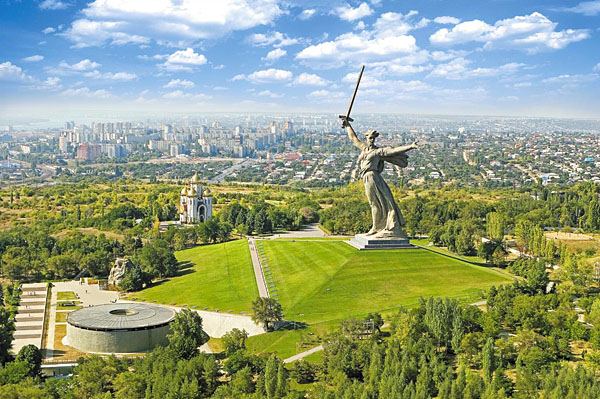
There is a river system in Russia which deserves particular attention of my readers and it is infamous «Mother Volga». Not everyone realises that Volga is the largest European river, accounting for the area, which is two and a half times size of France.


In USSR, the emphasis was put on developing industrial clusters. One of such clusters is Volga basin, which is now the most economically developed region of Russia, accounting for 40% of the Russian population, 45% of the country’s industry and 50% of it’s agriculture.

Mother Volga Monument

The water quality problems in this region are most severe in Russia, as constant toxic contamination coming from industrial wastewater and domestic and agricultural sewage water started many decades ago (see my previous blog entry). The Volga basin account for 1/3 of all water pollution in Russia, however the issue has not received a very widespread coverage in Russian scientific media so far.

- Industrial, Agricultural and Domestic pollution

The Volga is being polluted right from the very upstream reaches. There is a number of large cities located along it’s stream such as Astrakhan, Volgograd, Saratov, Samara, Kazan, Ulyanovsk, Nizhny Novgorod, Yaroslavl and Tver. As you move down the stream, every town and factory within it further adds up to the poisoning of the river. The overall pollutant load in 1997 consisted of 1.6 million tonnes of sulphates, 169,500 tonnes of particulate matter and 126,000 tonnes of organic compounds. Volga still remains severally polluted today. In 2001 the river received the following quantities of pollutants: oil products - 2 370 tonnes; suspended matter - 164 540 tonnes; sulphates - 736 460 tonnes and many other components of Mendeleev table.

Volgograd
Furthermore, every year there are some records about accidental oil spills appearing on the news. For instance, in 2008, a 1 kilometer-long oil stain was detected in the Chernoyarsk region of Astrahanska Oblast, which weighted over 32 kg. In July 2009, 2 tons of fuel oil were spilled as a result of a tanker wreck in Samara Oblast, forming a 10 kilometre oil stain on the water’s surface. 


Agricultural discharge from the nearby farms adds even more mineral, organic and toxic pollutants, which enter the main stream through the minor tributaries.

Hydroelectric Dams


The slow pace causes toxic pollutants to accumulate in the 8 main reservoirs and to settle on the riverbed - some parts of the river exceed the allowable limit of petroleum byproducts concentration by 100 times. This often trigger a process called «self-pollution», which means that even after the pollutant discharged has been stopped, the pollution continues due to the large amounts of of industrial, agricultural and domestic wastes stored at the bottom of reservoir. 


Effects of Pollution

Predictably, such changes in hydrological regime led to decreasing fish populations in the river. Large dams along the river eliminated many spawning grounds of transitory fish such as Caspian lamprey, shads, sturgeons, inconnu as well as worsened the conditions for survival. 

Fish are also known to be highly sensitive indicators of aquatic environment and ecosystem health. Pathological changes in fish organs help to determine the toxicity of water contaminants and the potential dangers. The chronic exposure of fish to the numerous toxic substances in the water led to the different types of pathology and dysfunction in their organisms.


In 2011, Russian regional parliamentarians addressed an official letter to then-president Dmitriy Medvedev requesting to take an action on «saving the Volga». However, even after having spend hours and hours browsing through official data, whether any investments into combating this issue will be made, remains very unclear to me.

Medvedev Taking Bath In River Volga


Sunday, 12 October 2014

Introduction


If we compare the planet with a communal apartment, we occupy the dirtiest room.
—Aleksei Yablokov, environmental adviser to President Boris Yeltsin


Regions of Environmental Degradation Within Former Soviet Union

The story of Russian ecology goes back to the past at the times when a former Soviet Union was a world’s largest state as well as the world’s most ambitious government which felt that pollution control was an unnecessary hindrance to economic development and industrialisation. 


Soviet poster representing a female worker and the "Day by day happier life" slogan
The Soviet society adopted the anthropocentric worldview which implies that the natural resources are merely a building material for everybody's "better future".

The environmentally threatening incidents (e.g the Siberian pipeline sabotage or Kyshtym radiological disaster) received no public notice due to censorship. The remedial measures taken were mostly slow, as government believed that the land could easily absorb any level of pollution. 

Therefore, it comes as no surprise that after the Soviet Union collapsed and the documents were finally revealed to the public, Russia had to admit that it was around 40% of it’s territory to be considered as under high risk of ecological stress. 

The citizens of the former Soviet industrial centres (e.g Magnitorsk, Novokuznetsk, Astrakhan) have now been struggling from tremendous air and water pollution, deforestation and the various skin diseases as well as disruption of metabolic processes among children, all as a result of environmental degradation. 


Magnitorsk


This blog is going to look at the number of case studies and research papers in order to understand the challenge that Russia is facing today. The topics to be covered include water and air quality, radioactive contamination, soils and forests. 

Even though some of the conditions that occurred in Russia are truly unique, if we were to put this situation in the global context it would become clear that the similar problems are faced by most of the countries around the world.