Showing posts with label environmental. Show all posts

Friday, 5 December 2014

The Air

«What is a Soviet citizen breathes as he watched with a sense os superiority a TV program about the suffocating Los Angeles smog?» 
Boris Komarov

Back in the former Soviet Union, the government promoted the economic development at all possible costs. On the eve of collapse of USSR, the country produced the same volume of air pollution as United States, however, with 2 to 4 times lower economic output. Although the level of industrial pollution has decreased since 1990s, Russia’s air is still among the most polluted in the world. 


The Soviet environmental protection agency regarded air pollution as the biggest ecological threat to the country. Starting from 1980, the Soviet meteorological service began recording the volume of atmospheric emissions coming from the two main sources: stationary sources (industrial enterprises and power plants) and transport (cars). According to this data, the total amount of air pollution in 1989 was 94 million, with more than half of this volume coming from stationary sources.


The pollution has been uneven throughout the country and some of the regions experienced heavier pollution than others. 

The Russian Arctic region is the home of developing gas extracting industries, as well as the largest nickel and copper smelting plants and coal mines in the world. Tundra and northern taiga are occupied by enterprises that produce paper and pulp, aluminium plants, oil extracting and processing industries, industries extracting gold and diamonds. 

Among the cities in northern Russia, the leading source of pollutants is Norilsk, which accounts for over 2 million tons of different toxic emissions per year. The city was founded back in 1935 as a settlement for the Norilsk mining-metallurgic complex, today, the largest one in the world. According to the indicator of relative danger from release**, Norilsk takes the first place in Russia.


The location of the plants around Norilsk means that residents always have to breath in the emissions coming from one or another side of the city. In this way, the northwestern part of the city especially suffers from copper plant releases when the wind blows from the west ; the south-eastern part is at risk when the wind blows from the south. The reason behind this odd construction plan lies back in 1930s, when the only people who lived in Norilsk were the prisoners from the GULAG labour camp and the government wasn’t worried about public enemies’ potential health problems. To make it even worse, such a thing as «ecology» simply didn't exist for Soviet government at that time. 


Sulphur dioxide and aerosols of heavy metals (nickel and copper) are the main components of atmospheric emissions from nickel smelters, which present a threat to forest ecosystems. For instance, sulphur dioxide emitted from the nickel mining combine is a cause of acid rains which killed all the vegetation within a 120 kilometer radius of Norilsk's facility. 


Vegetation Damage Around Norilsk Facility


The impact of air pollution around the city on humans is even worse. Norilsk is one of the 11 Russian cities with the highest rates of disease among children under 14 due to air pollution. 


The Russian government recently accepted an offer from an association of Swedish and Norwegian companies for upgrading the facilities of Pechenga Nickel, which would allow to cut sulphur dioxide emissions by 95%. However, there is no way to prevent the pollution of fragile subarctic ecosystem unless the management of the Norilsk facilities is willing to invest their revenues in the company instead of diverting them to their own pockets.


Footnotes:

*Standards for individual pollutants in the atmosphere were expressed in terms of maximum permissible concentrations (predel’no dopustimaya kontsentratsiya in Russian, or PDK) tolerated for human health. 

** The ratio of the released amount to the maximum allowable concentration (MAC) of the released chemical in the air

Thursday, 13 November 2014

Aral Sea

The ship "graveyard" in Karakalpakstan

Even though the name of this blog suggested that my analysis will be based around Russia only, the case study of Aral sea could not be ignored as it is a terrifying representation of land and water management combined together in the Soviet Union. Therefore, I’ve decided to extend my geographical constraints for today and to have a look at the lands of Kazakhstan, Turkmenistan and Uzbekistan, all of which are former USSR countries. 

The Aral Sea, once the fourth largest inland water body on earth, has become well-known to the world as one of the planet’s worst environmental disasters. It shows how the lack of long-term planning in chase of economic benefit can ruin the ecosystem and harm the society. 

The lake has been steadily shrinking, starting from the early 1960s, when the Soviet government decided to diverge two main rivers that fed the Aral sea, in the attempt to boost cotton production, which they used to call «white gold». Eventually, the Sea has shrunk by approximately 65-70% in volume and 50-60% leading to the extinction of various species and the change of region’s climate. 

The Aral Sea timeline:


Before 1960: 
The Aral Sea Before 1960s
1960s:
  • Water is drawn off at numerous points along the Amu Darya and Syr Darya in Turkmenistan, Uzbekistan, and Kazakhstan on their way to the Aral Sea. As much as 20 to 60 cubic kilometres of water is going to the land, so the Sea only gets 20 cubic kilometres in the most favourable years. At the same time, the water evaporates at the 33-36 cubic kilometres per year. 
  • There is not enough inflow to sustain the same water level, the Aral sea begins to shrink.

1970s:

1980s:
The Salt And The Toxic Chemicals Accumulated At The Seabed

1990s:
  • The water level dropped by more than 15 meters, the sea has shrunk to half of it’s normal size, causing the sea to split into two: "Little Aral" to the north fed by the Syr Darya, and "Big Aral" in the south fed by the Amu Darya.
  • The Aral Sea is fast becoming the Aral Desert. This leads to the change of climate - the summer heat has become hotter and drier and winters are more severe. 
  • The intense use of fertilisers and pesticides has contaminated groundwater supplies. At the same time, the settlements along the lower reaches of the Amu Darya in Karakalpakistan must draw up to two- thirds of their drinking water from the river. 
  • The region has turned into «slow Chernobyl» with increased infant mortality rate, typhoid fever, tuberculosis and viral hepatitis outbreaks.  
  • The Aral Sea’s surface is only 17,160 km2 . The five-fold increase in salinity has killed most of it’s flora and fauna.

2000s:
  • The South Aral Sea has been abandoned as the Uzbekistan government is more interested in extracting oil from the drying seabed.
North Aral Sea Rescue Program

The sad story of the Aral Sea is now repeated in other parts of the world. For instance, disappearing Lake Chad in Africa and the Salton Sea in California.

"Sorry, Aral [region]!"


Do you have any questions? What topic would you like to be covered next? Comment below.


Saturday, 8 November 2014

The Land: Chemicalization of Agriculture

Pesticides tend to be the most serious problem in those countries that have a strong agro-chemical industry as well as agricultural and forestry sectors that are characterised by monocultures and a goal of high labor productivity, which is a precise description of what was happening in USSR. 


"Sweetcorn is a source of abundance"
The Soviet leaders strongly promoted «the chemicalization of agriculture», which was believed to make the USSR self-sufficient in agricultural production. In 1965 the country produced 31.2 million tons of fertilisers, and in 1975, this number already reached 90 million tons. In 1986, pesticides were used on 87% of all arable land in the USSR. 


It is known that pesticides have been frequently misused and overused in the USSR, which often led to accidental kills of various animals. For instance, in 1979 the misapplication of zinc phosphide killed 169 geese at a collective farm near Rostov. The similar reports have been appearing all over the country at different times.

One of the main dangers of pesticides is their ability to build up to significant concentrations over time and remain in the environment for many years. From 1950 to 1970, more than 20,000 tonnes of DDT were used annually in the Soviet Union, pesticide known for it’s high potential to bioaccumulate, especially in the body fat of higher mammals. It is hazard to environment, both to those areas where it has been used directly and the regions thousands of kilometres away. Although there is still lack of knowledge on the potential harm of DDT to humans, some studies suggested an association between DDT and certain cancers.


Despite the official ban in 1970, DDT continued to be used until late 1980s. Following the fall of communism in 1991, many pesticide stores were left unattended and have since collapsed, threatening environment. An inspection by the local agency of Tomsk in 2002-2003 discovered 3 tons of DDT stored in local hangars, with reports that some DDT had leaked out into the surroundings.

The problem with intensive use of highly toxic pesticides in the former Soviet Union is that after the state has collapsed, Russia has lost the trace of where farm pesticides have been stored, which are estimated to exceed 250,000 tonnes. This means there are large amount of health-threatening toxins buried around the country still to be detected. 


Monday, 3 November 2014

The Land

Like other natural resources in the Soviet Union, agricultural land suffered heavily from the extensive nature of its exploitation. 
Many problems can be traced to the Virgin Lands Programme instituted in the 1953 by Nikita Khrushchev. Not many people know what Nikita Khrushchev’s wife has died young from starvation in the terrible famine in 1921, which might have left a lifelong concern for food and agriculture in his mind over his career at communist party. 
Virgin Land postcard
Dissatisfied with the low yields on existing farmland, Khrushchev initiated a drive to open up vast new tracts of land in order to alleviate the food shortages plaguing the Soviet populace. 
During it first two years, the Virgin Lands Programme recorded with positive and negative impacts. Grain productivity sharply increased, but soil degradation processes, especially wind erosion on the sandy lands, cleared of their natural vegetation. Most of the virgin lands were grassland of marginal quality and not allowed to lie fallow for long periods.


Though the program was abandoned, as it hasn't proved to be very sustainable, these marginal lands continued to be cropped continuously as farmers were under constant pressure to boost output. As a result, an average of 30–50 percent of the humus was lost, turning parts of southern Siberia and northern Kazakhstan into a virtual dust bowl. 

Wednesday, 22 October 2014

The Water: Mother Volga

There is a river system in Russia which deserves particular attention of my readers and it is infamous «Mother Volga». Not everyone realises that Volga is the largest European river, accounting for the area, which is two and a half times size of France.


In USSR, the emphasis was put on developing industrial clusters. One of such clusters is Volga basin, which is now the most economically developed region of Russia, accounting for 40% of the Russian population, 45% of the country’s industry and 50% of it’s agriculture.

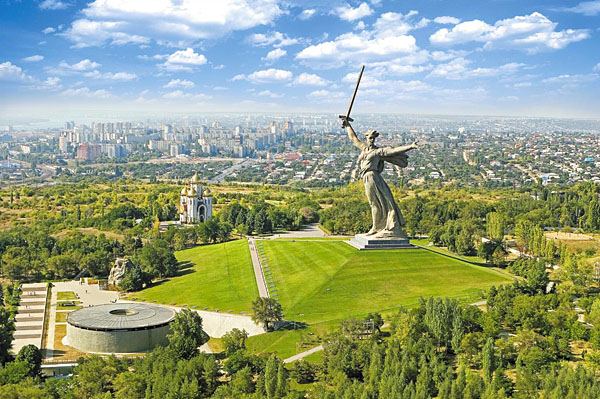
Mother Volga Monument

The water quality problems in this region are most severe in Russia, as constant toxic contamination coming from industrial wastewater and domestic and agricultural sewage water started many decades ago (see my previous blog entry). The Volga basin account for 1/3 of all water pollution in Russia, however the issue has not received a very widespread coverage in Russian scientific media so far.

- Industrial, Agricultural and Domestic pollution

The Volga is being polluted right from the very upstream reaches. There is a number of large cities located along it’s stream such as Astrakhan, Volgograd, Saratov, Samara, Kazan, Ulyanovsk, Nizhny Novgorod, Yaroslavl and Tver. As you move down the stream, every town and factory within it further adds up to the poisoning of the river. The overall pollutant load in 1997 consisted of 1.6 million tonnes of sulphates, 169,500 tonnes of particulate matter and 126,000 tonnes of organic compounds. Volga still remains severally polluted today. In 2001 the river received the following quantities of pollutants: oil products - 2 370 tonnes; suspended matter - 164 540 tonnes; sulphates - 736 460 tonnes and many other components of Mendeleev table.

Volgograd
Furthermore, every year there are some records about accidental oil spills appearing on the news. For instance, in 2008, a 1 kilometer-long oil stain was detected in the Chernoyarsk region of Astrahanska Oblast, which weighted over 32 kg. In July 2009, 2 tons of fuel oil were spilled as a result of a tanker wreck in Samara Oblast, forming a 10 kilometre oil stain on the water’s surface. 


Agricultural discharge from the nearby farms adds even more mineral, organic and toxic pollutants, which enter the main stream through the minor tributaries.

Hydroelectric Dams


The slow pace causes toxic pollutants to accumulate in the 8 main reservoirs and to settle on the riverbed - some parts of the river exceed the allowable limit of petroleum byproducts concentration by 100 times. This often trigger a process called «self-pollution», which means that even after the pollutant discharged has been stopped, the pollution continues due to the large amounts of of industrial, agricultural and domestic wastes stored at the bottom of reservoir. 


Effects of Pollution

Predictably, such changes in hydrological regime led to decreasing fish populations in the river. Large dams along the river eliminated many spawning grounds of transitory fish such as Caspian lamprey, shads, sturgeons, inconnu as well as worsened the conditions for survival. 

Fish are also known to be highly sensitive indicators of aquatic environment and ecosystem health. Pathological changes in fish organs help to determine the toxicity of water contaminants and the potential dangers. The chronic exposure of fish to the numerous toxic substances in the water led to the different types of pathology and dysfunction in their organisms.


In 2011, Russian regional parliamentarians addressed an official letter to then-president Dmitriy Medvedev requesting to take an action on «saving the Volga». However, even after having spend hours and hours browsing through official data, whether any investments into combating this issue will be made, remains very unclear to me.

Medvedev Taking Bath In River Volga


Sunday, 19 October 2014

The Water

Stalinist industrialisation put a great pressure on the urban infrastructure. Nevertheless, as the inflow of workers into cities grew significantly, none of the investments were diverted into improving urban environments. 
Only some of the major Russian cities had sewerage systems, while everywhere else around the country human and animal excrement was left to wash away during the rain. But even sewerage systems often didn't help, as the water was being discharged back in the river with no treatment at all. 
The Soviet Union lagged some 30 to 50 years behind such countries as Britain, France or Germany, compensating instead the absence of adequate level of sanitation by immunisation and antibiotics against water-borne diseases (e.g tuberculosis, pneumonia, gastro-enteric infections).
Apart from the risk of catching disease, the urban residents in USSR had to cope with the difficulties associated with the lack of indoor piped water. The routine tasks such as laundering, washing and cooking required significant amount of time and energy, adding to already difficult living conditions ( e.g. working long hours in the under-heated factories and walking long distances to work, in the absence of adequate public transport).


By the end of the 1930s the impact of industrialisation on country’s water supplies was beginning to attract attention. Unfortunately, not because of it’s harm to human health, but because of the economic damage it was causing to the factories and fishing industry. 
For instance, in winter, the chemical pollution in Oka, Northern Donets and Viatka was so strong, that fish would die from oxygen starvation while the discharge from a single factory like the Nizhnii Tagil coke-oven products factory could eliminate fish in the River Tagil over a 200-300 km radius.
Northern Donets
Furthermore, the organisation of water supplies in the Ural region was so inefficient that the pollution of rivers by upstream factories made them unusable for the ones downstream, not talking about the health impacts it implied.
However, none of the attempts by Soviet government to instal anti-pollution equipment succeeded. Waste treatment considered to be of a minor importance to the ones in power, so often the installation process could not be completed due to lack of building materials or labour power. 
  1. A belief that powerful rivers are «self-cleansing» and able to dilute industrial waste, and
  2. the idea that there was a maximum allowable concentrations of toxins (предельно допустимые концентрации).
These concepts ignored the facts that any amount of toxins tend to build up over time in surrounding flora and fauna and that toxins can interact to produce even more dangerous substances. Whether the Soviet Government truly believed in their truthfulness or used these theories as excuse - remains an open question. 
The main point here is that the policies and behaviour regarding water pollution back in Stalin era could be responsible for an ecological catastrophe that occurred later in 1980s and still persist today.

Reference:

Filtzer, Donald (2009) "Poisoning the Proletariat : Urban Water Supply and RiverPollution in Russia's Industrial Regions during Late Stalinism,1945-1953"